The Real Cost of Waiting (part ii)
- Dan Akinlalu

- 3 hours ago
- 7 min read

Welcome back,
Last time around on Reflections, we discussed three categories of waiting that prevents artists at every level of performance art from getting the kind of respect they deserve.
These problems affect veterans, beginners and intermediate performers alike.
Some of these issues are just careless mistakes... but even those errors can be make-or-break in this critical business, you've probably heard this oh-so-quotable saying already,
"There's no business like show business..."
It's true.
If you compare the business of...
Film productions
Album recording sessions
Live performance touring productions
Fashion editorial creative direction sessions
To other more commercially-minded businesses where employees work from 9-to-5, you're going to notice some gigantic differences, even though your Walmart stores, phone service companies, and real estate agents might find themselves including one of these artistic mediums in their stores, or selling access to art as part of their sales pitch, the role of a person who is consuming art is very different from the person who creates art.
We talked about some of these differences in the series primer, as we discussed 3 types of waiting.
Performance Mode
Observer Mode
Fragmented Mode
For artists still hoping for a big break... most times they're stuck because these categories distract artists, slowing down their momentum into bleak plateaus.
As I've mentioned before, overlap is very common within these distinct categories.
Artists struggle with more than one of these modes... before they discover a well-written insight, or receive the kind of guidance from a mentor who has been there... and figured out a way to succeed regardless. On the other hand, if you're still curious about the details of what separates performance mode from observer mode, then I suggest you read the primer because... it deftly cross-examines the first two categories listed above.

Fragmented Mode
One of the great things about Toronto is the diversity in our art scene.
Diversity can mean different things to different people, for some it's a calling-card which refers to a variety of ethnic groups. In some casting calls held by Toronto designers or modelling agencies, diversity... means performers with any skin-tone can apply.
Another way of looking at Toronto's diverse creative community is this...
Toronto is a city where people from many ethnic backgrounds, explore various artistic mediums in their creative journeys. This diversity is seen clearly in rising stars and established artists, the 6ix is a city where creativity is explored with a spirit of adventure.

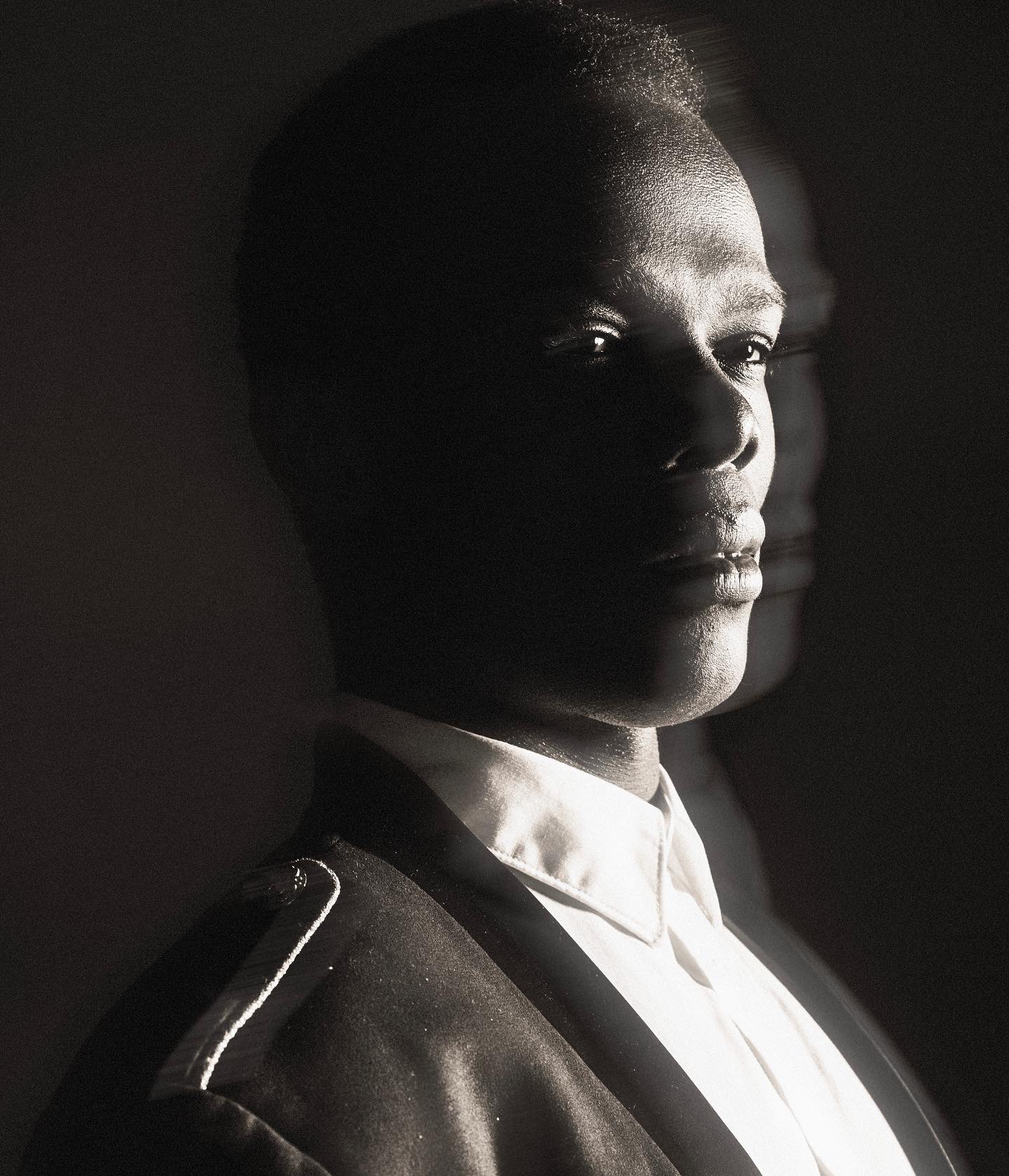
A good example of Toronto's diversity, is Samara, who models here in today's post.
She does runway shows at fashion week
She has been published in magazine editorials
She sings and has released music on Spotify, Apple Music, etc
She has performed one of her songs inside a music video on YouTube
When we first started working together just a couple years ago, we met during a make-your-own-content fashion networking event for models, designers and photographers.
I took my camera with me to the studio, and we connected as we took photos that night.

The next time we shot together was for Quadro magazine, who published our editorial, it was the first time she had been featured in a fashion magazine, and after posting it on her profile, more excited collaborators started to reach out, more visionary and elite photographers started booking her for editorial shoots and her career started taking off.
On the other hand, some models get published in a fashion magazine, and choose not to post it. Unlike Samara, they don't share images of their work on their Instagram stories, or grid profiles, perhaps feeling a bit shy and wondering what some of their followers would think. "I don't want my boss to see this..." or "I don't want my boyfriend to see this."
Ironically, there are people who would suggest a new boss, or a new boyfriend as a solution to those problems instead of choosing not to share editorial work online.
Why? Because that type of waiting creates fragmentation.
For models who fantasize about getting published on the cover of magazines, it gets way easier for editors to choose you on the cover of their magazine when they've seen you featured inside the magazine pages of their competitors before, or better yet... if they've already published you before in one page... giving you a bigger chance by making you a cover girl won't feel like such a huge gamble for the magazine.
Plus the photographers and designers who follow Quadro magazine, Imirage magazine, Vogue, or Vanity Fair might suddenly stumble across your social media post if you were featured one of these magazines because the algorithm would give you extra reach.
Posting your work on social media, letting your audience know what you're capable of doing takes a lot of guts if you combine art-forms, because it can make it harder for people who knew the old you, to connect with the new you. But that's what makes the difference when you career has plateaued, sometimes it's because there's art inside your drafts, or your archive that you haven't posted yet. Other times, you might have shared certain parts of your creative journey on one website, or social media platform, but you haven't made it part of your Instagram page. This is fragmentation, if a casting director is looking for someone with your aesthetic to be in a music video, and you haven't posted any reels, or visuals of you moving on your IG page, you most likely won't even be considered for the music video production.
Fragmentation mode costs opportunities.
This doesn't mean you should post everything you create.
The key to progressing outside of fragmentation mode is learning what your message is.
This means having answers to questions like:
What is the unique message you want to get across to the audience?
If you know exactly what you want to get across to the audience, then you can build creative worlds using multiple mediums to express the same core message.
From this point onwards, making a Link tree that features your Instagram as well as any other place people can find your performances (music streaming services, film streaming services, personal website, YouTube profile, IMDB page) will feel like a natural next step since all these pages share the same messaging, making your personal brand feel more cohesive and professional. This is important when working in show business.
What worldview or philosophy are you hoping to share on the Instagram feed?
Let's say you had a philosophy that inspires you to get out of bed every morning.
If you could communicate this idea in your art as a subtle message the audience walks away with when they see your pictures, or read your captions, or watch your videos, then you could build an audience of people who share the same reasons for living.
Think about how nourishing it could feel to be this connected to your audience.

Another question that can help refine your message is...
Are there perhaps some deep or dark thoughts about life, love, humanity, spirituality, sensuality, beauty and art that you want your audience to wrestle with?
These are questions that Samara could answer if you asked her.
We've had plenty creative conversations where we discussed these topics during photoshoots so we could align our messaging, deepening the connection between artist and muse that comes through to you... the audience when you look at the pictures here.
There are different types of artists... one group can be called the visionary artists, like photographers, fashion designers, videographers, film directors and creative directors.
These artists work in art forms that can feel introverted at times because they have a specific vision, in many cases this vision comes with a message. Sometimes the message needs to be refined for an audience, or channeled through somebody else.
Performance artists are the second group, also known as muses... the people who channel messages of visionary artists in their performances such as actors, models, dancers and singers. (Perhaps this yin and yang of art deserves it's own journal post.)
Performance artists will sometimes develop their own unique message, but depending on the art form you choose to explore, it doesn't always happen quite so smoothly.
Models have the benefit of working with photographers, designers and visual artists who are often going to present a message to hired performers when they collaborate.
On the other hand, singers need to discover a unique message to write songs, so for models who transition into the music business, the questions we've considered today, should have an interesting answer already figured out before the crowd of eager fans, curious magazine editors and journalists are asking about your message as an artist...
So that by this point you can keep the momentum growing effortlessly and develop a deeper connection with your fans, by giving them the opportunity to resonate with an deep and authentic artist statement that is uniquely yours... just share your message.

Because world-building as a multi-talented artist with a core message will create opportunities that artists who hide their creative talents which could attract the most attention, or separate their gifts in ways that makes it harder for casting directors to know their full capabilities... struggle to get booked for, simply because there wasn't enough time to click another link. What's more is fragmentation leads to weaker ties with their own audience... your day-1 fans definitely want to know what your message is.
Even for artists who explore just one of the visionary arts (or performance arts) can benefit from the kind of artist development that focuses on message discovery. It's a unique mentorship experience that can be valuable to both visionary artists and performance artists because of how this process reveals more sides of yourself... to you.
Part of building momentum is letting the audience discover more parts of you.
It's not every day, that a person discovers a new artist who has more than one talent, what's more is people are often excited to be part of any artist's "underground" journey.
There's a certain level of pride that day-1 fans experience, which band-wagon fans who only support you after you've become a house-hold name don't get to feel... until they discover a new artist who hasn't gone viral yet... but shows a lot of potential for success.
A question you might be asking yourself now is...
"How can they even tell?"
It's a great question worth repeating.
How do people tell which artists are going to "make it" one day?
Your message will them.
Ready to build momentum?
Explore the benefits of self tape reviews, artist development sessions, portfolio reviews and learn from our creative direction by working with us at House of Mirrors.


Comments