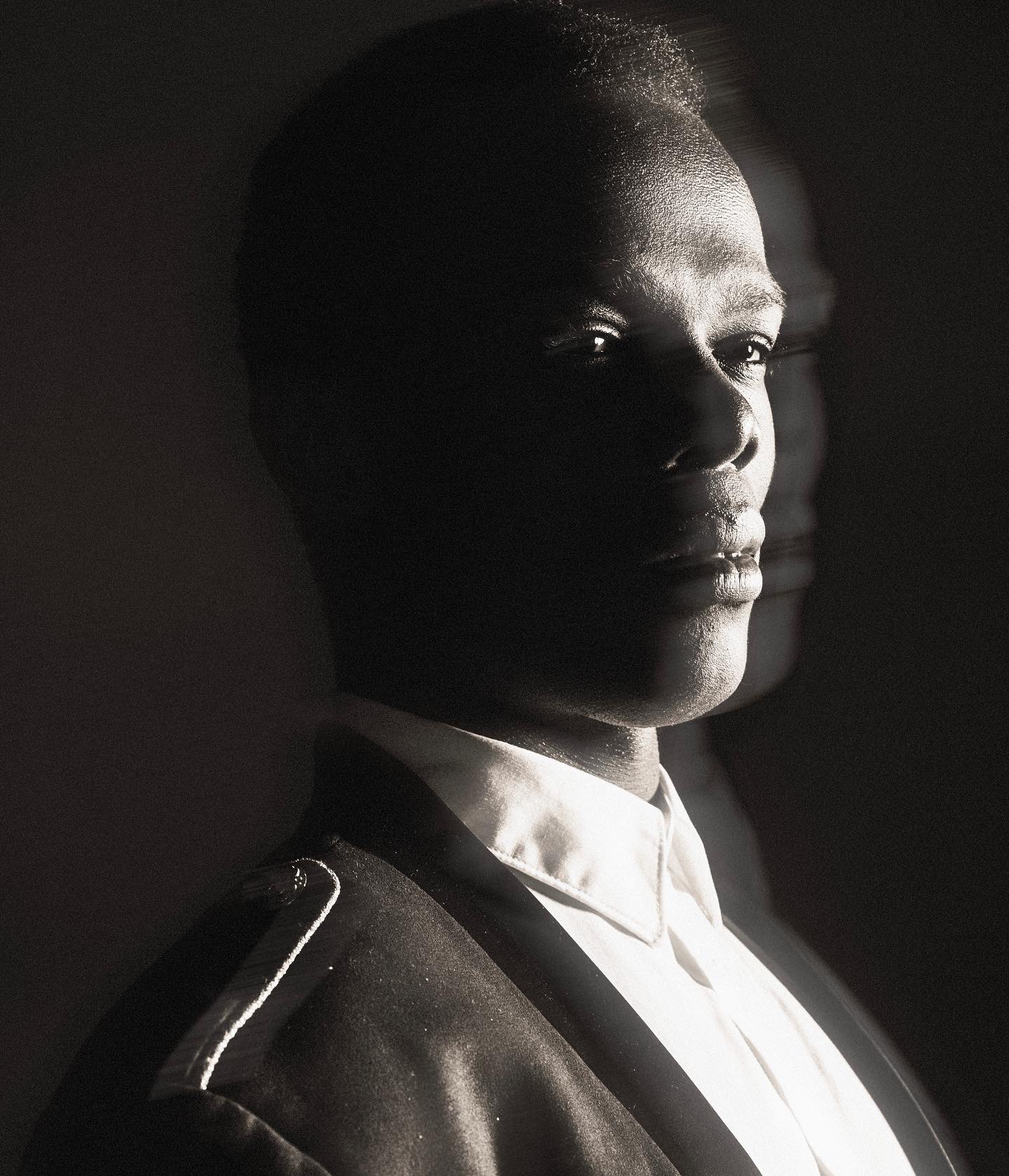
The Real Cost of Waiting
- Dan Akinlalu

- 11 hours ago
- 7 min read

Over the last few months, I've reviewed self tapes and portfolios, interviewed performers, cast editorials and spoken to artists at very different stages at their careers.
Runway models who fantasize about the world of screen acting. Commercial actors who are trying to transition into playing characters in films and TV shows. Leading ladies of cinema.
I've spoken to performers at each level.
Beginner performers
Intermediate performers
Veteran performers
There are patterns that keep appearing.
Some performers treat every opportunity as a test.
They try to impress. Instead of revealing themselves.
Other performers get stuck waiting for:
Better representation
Better equipment
Better connections
Better confidence
Meanwhile momentum dies and rust builds.
Inertia is that feeling of watching from the sidelines. Clicking on Instagram stories. Watching highlights as the dread builds and builds, the fear of missing out becomes paralyzing.
Which leads to more waiting, more procrastination and more anxiety.
The self-perpetuating anxiety of bed rotting... is a pricey cost of low momentum.
Sometimes the problem is actually a calibration issue. Imagine an actress with one Instagram account, one self tape on a Mandy profile, one resume on Backstage, and a portfolio link to her site on Link tree but none of these other pages are connected. They're all fragmented, with no coherent narrative. These easily over-looked errors can make it difficult for casting directors to book talent and much harder for the audience, to fall in love with the actress in question.
Let's have a closer look at these issues as HOM reveals how to evolve beyond these plateaus.

The 3 Types of Waiting
There are three overarching categories of waiting that prevent performers from reaching the next level of skill and opportunity in filmmaking, fashion and the music industry.
Now, there is often a fair amount of overlap in these groups, many performers struggle with more than one of these issues and unfortunately some aren't even aware it's a problem yet.
Performance Mode
Observer Mode
Fragmented Mode
Before we continue, there are deep secrets you should know about performance art.
A self tape audition isn't really about acting.
A magazine editorial isn't about the photos.
A portfolio isn't really about content.
An album isn't really about music.
They're all attempts to answer the same question.
Who are you?
Each of the three types of waiting, makes this question harder to answer.
While mystery and intrigue can be interesting for audiences, and certain mediums do love enigmatic characters it's key to understand there is a difference between intentionally being mysterious as a unique style of service-promotion, and intentionally creating barriers between you and the love of your audience. You don't want to make yourself harder to love as an artist.

Performance Mode
The main issue with performance mode is how much effort it takes to maintain.
For the performer consciously wearing a social mask to call-back interviews, there is an eagerness to impress that can seem affable, or even charming, during the first few minutes.
But let's say the interview happens over dinner or drinks... that could stretch to more than a couple hours. Eventually the mask becomes harder to maintain for the performer, keep in mind that they might be asked to improvise lines during a call-back, deliver compelling in-character monologues without a mic, cold reading is also a quite common part of the casting process.
It would feel much more effortless to be your natural self in the moments of the interview, then perform in-character in the moments when you are asked to act. Letting the casting director see the difference between your natural state of being, and you as the character can be very informative in the production because it answers the primal question of "who are you?"
This is why most self tape auditions involve slating.
Now there are situations where the differences between you and the character aren't as clear, there might even be moments where you feel like the character you're auditioning for... is you.
The difference is... in such cases the director and the production team gets to have that realization independently... instead of you trying to play the character for the whole interview, which can be quite easy for an experienced film director to notice in seconds.
Waiting too long to reveal the real you... to a creative director you're auditioning for can slow down the casting process long enough for that performer to end up getting replaced.
It feels more genuine for me to walk away from an interview feeling intrigued by an actress because I noticed that the answers to her questions naturally matched the rest of the script that she hasn't seen... because we're still quite early in the audition process... than for me to end a meeting because it's become clear to me that an actress is trying to give me her version of the role to compete for the role... without even having the context of the full script. By the time, a HOM film casting progresses to a call-back interview, it's simply a question of finding out who the person is... the question of can they play the character has already been answered.

Naturalism is essential for film acting, where the camera gets so close, it feels as if the audience is sitting across the table from the actor in question. This is why interviews at a dinner table can be helpful way to evaluate what roles talent naturally gravitates to.
If it takes a lot of effort to get into the psychology, philosophy, or physicality, of a character, it's going to become obvious eventually by the time the production is underway, so getting a sense of this information during the interview is one of the reasons it's on the schedule.
If the answer is yes... it does take a considerable amount of effort to get into the role, that doesn't mean they've lost their chance of booking the role... it simply means the production assistant will need to adjust the schedule to accommodate a warmup and cooldown period.
Some Canadian film productions have a reputation of only filming one, or two takes of a scene before moving on, which could be one of the main motivators for performance mode, where performers are trying to meet the demands of the market. However, since I make art house films, with character-driven stories, the question of extra takes to get a scene right isn't a tough one, the HOM answer is whatever works to get the scene right. If we get it on the first take as we often do, great. If we need more takes to draw out a more magnetic performance...
...then that's cool too.
Observer Mode
This is a tricky one to evolve beyond in our digital, social-media age.
At every second of the day, for 24 hours a day, and 7 days a week, you can see clips of performers making art, you can see content creators hating art, you can see faces of people you've personally met, and faces that you fantasize about meeting one day if you're lucky.
Observer mode is what happens to the person who gets the rare opportunity to meet an artist they admire and they let their nerves get the best of them. You hear stories about collabs that never happened because of creative differences, which are understandable. But the stories that drive people crazy are when two artists wanted to collaborate, and it.. just didn't happen.
It's like a moment where you're scrolling through profiles on Tinder or Hinge.
Then suddenly you see someone fascinating. You swipe and match with them.
The excitement turns into euphoria and you can't figure out what to say next. But you don't want to say the wrong thing... so you don't say anything... an hour passes. Two hours pass.
Before you know it... a day passes. The stress keeps building until... the person un matches.

Observer mode leads to disconnection, often.
What's more is it won't even let people meet the artists they want to collaborate with. The DM is received but never opened, or opened but left on speechless. It happens.. and not everyone can handle the jump from observer to performer, you can watch content for hours in your sweatpants without anybody scrutinizing you. But the price of being seen... is the resentment of the insecure. People who are stuck in observer mode write mean tweets, throw shade in IG comments and consume videos made by art critics on their doom scrolling conveyor belt of content. However, sometimes observer mode is because some people can only love an artist... when they're still small and attainable... as the artist starts building a larger audience, the same people eager to collab when they were "underground" are hesitating to join the mix.
With this group, I've found the most useful conversations aren't really about acting technique, or camera lenses, what helps someone evolve beyond observer mode... is more clarity.

However, it's an important part of understanding the story you're telling, before you step in front of a lens. Absorbing lines in a script, discussing subtext with the writer, and reviewing mood boards with a creative director, can bring peace of mind to anxious observers.
Clarity can make creativity a fearless experience. Learning to escape the cage of observer mode and explore shamelessness in art enables you to channel your emotions into self-love.
It's an important step towards dropping the mask and bringing your fantasies to life.
Over the coming months, I'll be opening up a limited number of audition coaching spots, portfolio reviews and artist development sessions through House of Mirrors.
If you're interested in building momentum, instead of waiting for it.
Keep an eye on this journal.


Comments