Performer's Paradox
Updated: Aug 14

Did you know performance art is older than literature?
Long before written words were carved into stone, we sat around ancient flames as wild, masked, medicine men told stories through song and dance. In temples, the priestesses and shamans embodied heroic ancestors, powerful gods or enchanting goddesses, as story telling had evolved, becoming the bed-rock of our religions and founding myths.
In ancient Egypt, medicine men stood before pharaohs and chanted spells, revealing the secrets of ancient history, taught us astrology, and predicted the fate of empires.
In ancient Greece, the chanting chorus gave way to the allure of solo performance.
The monologue was invented. Poetic soliloquies revealed the inner thoughts and desires of characters. Holding up a mirror to human nature as it evolved through empires.
In ancient Rome, the scale of performance grew even more to become a visual spectacle.
Medieval theatres innovated new storytelling genres... giving us farce and folk tales. By the time the Renaissance came around, commedia dell'arte... what we call comedy today was sweeping through Europe like a creative army of joyful savages. Baroque gave us more flavors and sub-genres, expanding the culture of performance art so audiences could feel the emotions of performers more intensely than visionary paintings of fine art.
Then finally, in the 19th century... there was a shift starting with one man.
Moscow's Konstantin Stanislavski, a theatre-acting guru, created a ground-breaking performance art system for actors that transformed the stars of a relatively new art form called cinema. Performers from all over the world, travelled to learn from him, to train with him because of his wonderful innovation, a practical and intuitive system that enabled performers to express psychological truth on stage and in-front of a camera.
Modern performance art works from the inside out. The acting coaches like Adler and Strasberg who nurtured Hollywood's talent in their star-making studio system, would eventually become known as American pioneers of Method acting. But what is it really?
Performing Psychological Truth
We almost take this for granted today in our digital age because the performance of psychological truth has become an industry standard. Thousands upon thousands of films, TV shows, music videos and fashion magazines have made their mark in the pages of history because of this style of performance art which originated from Stanislavski.
When considering the craft of acting often involves a brand new accent, exciting facial expressions and a unique body language that differentiates one job... from the next... it seems paradoxical to perform psychological truth that showcases such a wide variety of human nature. This is why there are certain techniques which are taught to smoothen this process. In our modern economy, it's necessary for all performance artists to learn to perform psychological truth, even if you're a model, dancer, or musician, because today, modern performers re-invent themselves with new eras. Plus, if you're an actor, then the audience... will definitely expect the characters you play to have noticeable differences from your base personality... to avoid the boredom of "You're the same in every role."
The performer's paradox comes from the audience's thirst for emotional realism.
Ever since Stanislavski gave humanity a taste of it. Dramatic intensity without self-erasure, range without dilution, surrender without being consumed by the craft.
These techniques have been branded as Method acting.
Even though that label refers to several different intuitive strategies and encompasses many types of acting tools... it has become associated with the most extreme version.
But there were 2 main schools of thought in the West.
One prioritizes imagination (Stella Adler's interpretation of Stanislavski's methods).
One prioritizes memory (Lee Strasberg's interpretation of Stanislavski's methods).
There have been heated debates over who got Method acting right.
But both schools produced talent that went on to star in critically and commercially successful performances, because both schools focused on different eras of the acting guru Stanislavski's teachings which evolved as he continued his search for emotional realism. This is the key ingredient for the artist's performance of psychological truth.
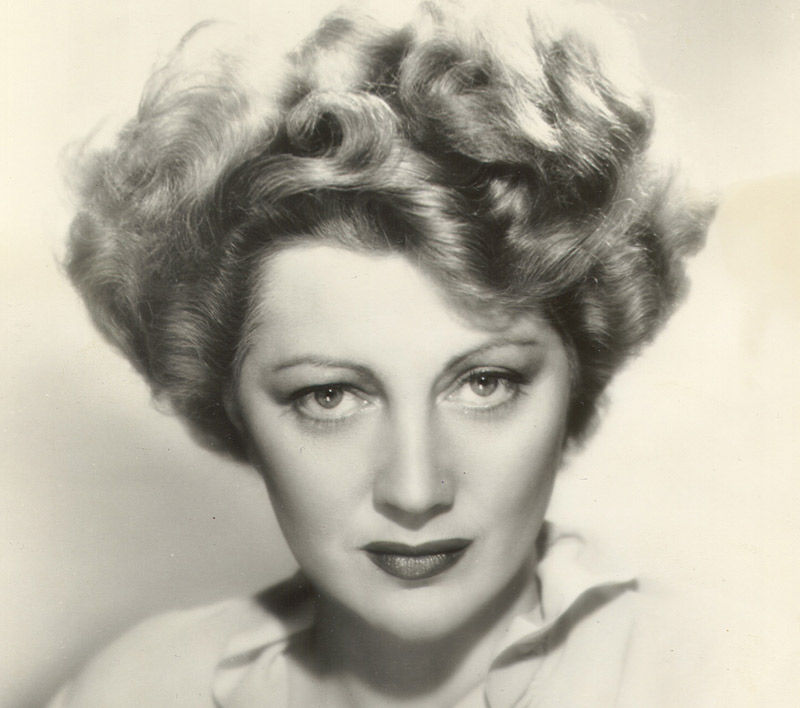
The respected performer Stella Adler, trained with Stanislavski in Paris and came back to her New York actor's studio where she coached her talented students such as Marlon Brando, Warren Beatty, Robert De Niro, Melanie Griffith, Salma Hayek and Mark Ruffalo.
Additionally, Lee Strasberg's actor's studio has a long list of stars like Marilyn Monroe, Cicely Tyson, Mickey Rourke, Al Pacino, Angelina Jolie, Uma Thurman and Lady Gaga.
Filmmaking is a fascinating medium that can absorb, contain and elevate any art form.
You can fit any other creative medium into a film. In essence, great films are to art... what Canada is to countries. A safe space where people from all over the world come to find a deep sense of harmony in by participating in the on-going creation of a cultural mosaic.
The performers who learned Stanislavski's ideas through the schools of Strasberg and Adler are consistently displayed on social media algorithms as examples to aspire to.
Some of these performers explored emotional realism in more than one craft.
The music that lasts for generations doesn't just sound good... it feels right.
The dances that everybody want to copy don't just look good... they feel fun.
The models that every fashion editor wants to publish... turn their faces into stages.
By this point, it's clear that singing, dancing, modelling all benefit from a performance of psychological truth. What's more, is even in today's digital attention-economy where social media and short-form video content flood your feed, where the technological power of editing, took story-telling in several different directions. Some threatening to shrink your attention-span, while others have such authentic, compelling performances that you can't help but focus more intensely. Each time an artistic medium, technology, or the human brain evolves, so does performance art and the audience gradually adjusts.
The Modern Paradox
The evolution of the human brain is unstoppable.
Social media algorithms have triggered another upgrade in performance art out of economic necessity. It's a subject we've touched on before, the question of what audiences expect from performance artists has changed dramatically because of how easily accessible HD cameras have now become due to the invention of smartphones.
Throughout the illustrious history of performance art, female performers have faced a wide range of challenges. For millennia, women were unfairly held back from the world of performance art, girls were prohibited from performing onstage. In Shakespeare's time, it was common for young boys to dress up as girls, upholding a gender barrier.
By the time Stella Adler, was performing on stage and stealing our hearts in her films, society had evolved to a point where it made no sense, economically and politically to continue to prevent women from becoming performers. But even then, there were still certain sexist limitations that unfortunately still reverberate in Hollywood studios today.

We all know the search for emotional realism can sometimes lead to madness.
Even doom-scrolling for way too long, watching far too many intense performances of psychological truth, letting algorithms compete for your attention can worsen mental health. But for the performer who builds their life around earning a living from art, the question is how far you're willing to go in your performance of psychological truth?
But immense social expectations of women in the limelight have led actresses to speak on how rare it seems for a woman to explore the more extreme sides of Method acting.
The term "going full Method" is usually what people are fascinated by in our modern era. These performers who embodied a role so completely, deeply inhabiting the abnormal psychology of a compelling character on set, that the fantasy just took over their life.
“We can’t completely lose our minds. I see acting as kind of like a controlled psychosis in a way. You are pretending to be somebody else and having their thoughts 16 hours a day and moving with them and living in their house and in their clothes. But I’m just very grateful that the people in my life understand that and know that. Sometimes if it gets a little bit out of hand, they’ll call me by the character name.” - Anya Taylor-Joy
As you can see from Anya Taylor-Joy's revealing interview with The Hollywood Reporter, the search for emotional realism in our modern world asks each actress who performs psychological truth to explore the intensity of Method acting without letting the fantasy fully absorb their life, and totally consume their mind. There's a subtle tightrope between surrender and resistance that performers walk on, that Kristen Stewart speaks about too.
All performance art requires you to surrender to the moment.
As actors become a dramatic mouthpiece for the screenwriters ideas, dancers physically submit to music's rhythm, and singers will align themselves with harmonious melodies.
Even models who aspire to a magazine cover with their name on it will surrender to the moment as their facial expressions and gesture tell a story that resonates deeply in print.
If the performance explores the extreme side of human nature, the search for emotional realism can become political when we consider how masculinity and femininity alters modern society's expectations of performers which are heavily attached to their gender.
Art can definitely inspire new expressions of manhood and womanhood, but before you become the blueprint it's quite common for the audience to treat you like a scapegoat.
The pressure funneled through social media feeds, where mean tweets pit female performers against each other, misogynistic comments attract hateful attention and these are tough challenges that models, actresses, singers and dancers all deal with.
Preparation isn't just for performance, it's also what helps you deal with reactions and the shocking responses that can follow after you perform emotional realism on camera.
Thick skin goes a long way, and with the right guidance you can find empowerment in the limelight instead of feeling pressured to shrink and dilute your intense performances.
At House of Mirrors we encourage performers to explore their sensuality, masculinity and femininity with the power of erotic art. However, what the audience sees publicly is just the tip of the iceberg — built through careful preparation and professional direction.
The beauty of human expression is found in versatility: our capacity to expand beyond social limitations has been refined through decades of performing psychological truth.
If these ideas resonate and you’re a model, dancer, or singer ready to bring that presence, intensity, and emotional realism into a live, mythic setting, we’re currently hosting the final round of live casting for House of Mirror's Return of the Sirens.
A swimsuit fashion show that merges fashion, music, dance, and performance.
Join us for the live casting in Toronto:


gotta bookmark this one chief
this essay zooms way out describes history of performance before narrowing to challenges faced by modern performers. the quality of writing elite as always. what i've learned about performance art mediums from house of mirrors is top stuff, the foundation of magnetism, and unparalled technical understanding.