Fantasy of Fall
Updated: Aug 23

Ever noticed how many industries are intimately connected to the fantasy of falling in love?
Perhaps it could explain why love is used so casually. People describe a love of inanimate objects, products, declare love for albums, worship artists they've never even met. Some creative directors can relate to the lived-in tension underneath Don Draper's iconic line:
"She won't get married because she's never been in love... I think I wrote that to sell nylons." He says while smirking at the heiress. Then after her chiding reply, he continues slyly:
"Oh what's that? You mean love? You mean the lightening bolt through the heart where you can't eat, can't sleep and you just run off and go make babies." There's a sensual pause.
Draper says: "The reason you haven't felt it... is because it doesn't exist. What you call love was invented by guys like me to sell nylons." It's a nihilistic perspective, that cuts deeply into the soul of any hopeless romantic. What's more, his 1960s Madison Avenue, ad agency could list dozens of commercially viable stories, that play on TV, convincing housewives to buy new products, single women to stock up on nylons, and the Boomer children to beg their parents for an experience seen on TV, concocted in the minds of chain smoking executives.
Before content creators brainstormed with AI, creative teams consulted... with researchers, scientists and psychiatrists, to figure out how to tap into psychological needs and social fears,
so various goods and services could be presented as a soothing lotion for a rather deep itch.
Manhattan brainstorming seemed to leave no stone unturned in this capitalist march.
Mad Men on Madison Avenue, studied your dreams, then got rich by selling them back to you. The American dream became linked with the fantasy of falling in love, a pursuit of it.
That's not the only industry held up by the subconscious cravings and yearnings of humanity.
Before artists sat in their bedrooms, writing songs, making beats, recording on their phones and figuring out how to get their songs on TikTok. Record companies selected talent, created groups and poured millions of dollars into artist development to make audiences fall in love with their talent. The fantasy of falling in love permeates several industries and today, in our modern, digital attention-based economy, with un-skippable ads telling you that women will be lining up to date you if you buy a product. And independent artists competing tooth-and-nail, to be selected for these brand-partnerships, some of which may even go as far as selling predatory services to impressionable minds.
Hippie Love & Disco Desires
You can’t help but wonder if Draper was right—whether the fantasy of falling in love has been so thoroughly commodified that it never existed outside the sale. Yet that same fantasy once carried a different cultural charge. In the 1960s it was not just a marketing tool; it was a political movement and aesthetic project. The hippies who resisted conservative ideals and social repression tried to make love itself the revolution—building communes, forming rock bands, and transforming the aesthetics of masculinity and femininity under a mythic, flowery philosophy of free love. The fantasy of love became social justice. The fantasy of love became rock and roll. And, inevitably, it was also sold by Coca-Cola using hippies in a commercial.
Ah... the 60s,
A mystical time back when the general public, and youth of society still believed that peace, love and the hippie philosophy could save society. But something happened in this decade.
Something dark, a series of ritualistic murders that unraveled the psychedelic hippie euphoria.
Society was forced to wake up and smell the coffee, when Sharon Tate was brutally murdered while pregnant inside her home. It was the case of the century. The police were stunned. The public was shaken. More murders shook up the youth. Civil rights leaders were assassinated, Malcom X, Dr. Martin Luther King Jr. Even artists who dared to question the status quo, found themselves on the receiving end of political violence. War on the news. Brutality divides public consciousness, protests brought people of all races... out on the streets, for change.
There was a passion, that motivated people to risk their own safety to send a message to oppressive governments. There was a boldness, that inspired artists to reflect this energy in their music, to write songs that expressed the pain, and healed the psychological wounds.
It was a time when the power of erotic art found a devoted audience in popular culture.
But decades later, in our time, it might seem like few things in society have truly changed.
People are still protesting wars and war criminals continue to shake up the public. However, technology has made it easier to see the political violence play out... and perhaps people have gotten de-sensitized to seeing it so clearly and vividly. There was still passion back in the 1960s—people risking safety to demand change, artists turning that energy into music that both expressed pain and tried to heal it. The power of erotic art found a devoted audience in popular culture. But as the decade closed, the odds of revolution seemed to dwindle.
The culture needed a new sound and a new form of hope.
The 1970s answered with a different expression of the same fantasy: less utopian politics, more embodied joy. While many rock stars fell to addiction and violence, Motown’s tightly managed machine kept delivering hits. More revolutionary and commercial ideas found their way into music. The Jackson 5 made a spectacular impact, yet the business behind the music revealed how thoroughly the fantasy could still be packaged and controlled.
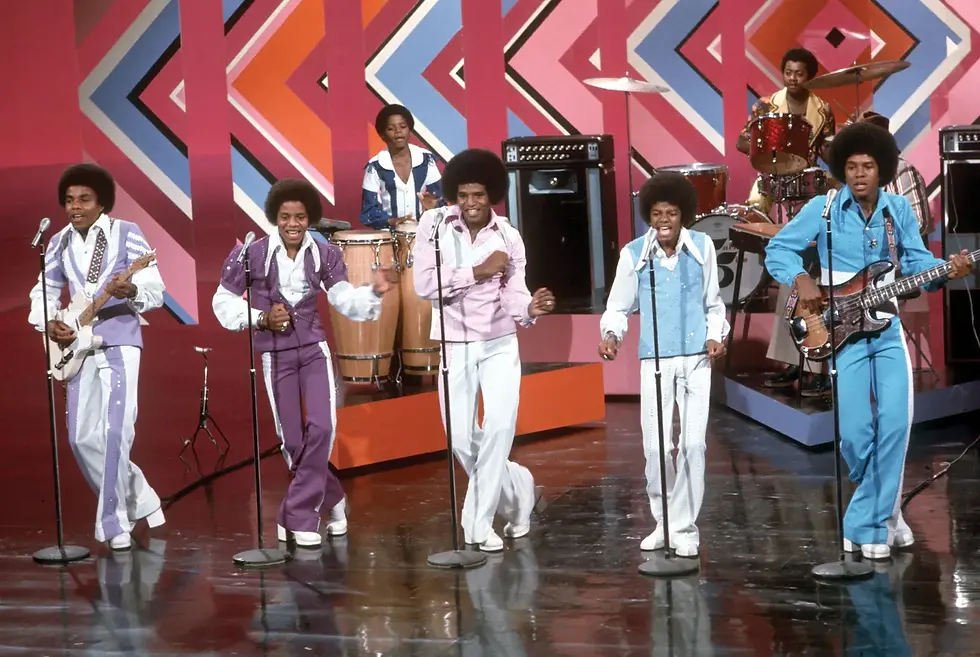
More specifically, black music.
The chart dominance of these Motown artists was supreme, and yet Michael Jackson said that his father, Joe Jackson, "signed their life away." Motown had an exploitative program where the Jackson family was earning just 2.8 percent royalties on these epic hits.
Barry Gordy kept everything else. When Diana Ross left Motown, it was with less than two hundred thousand dollars. Joe got them out of Motown, before it was too late.
But they had to deal with a lawsuit where Barry Gordy ended up keeping the name.
Even as the Jacksons escaped one restrictive deal for a better one, the larger pattern was clear: the fantasy that drew audiences could still be owned, branded, and sold back to them
The public desire for disco music, art designed to inspire dancing, awakened the joy of love from radios all around the world. Donna Summer was the reigning queen of disco music and with the innovative ideas of black artists reaching the forefront of American culture, the power of erotic art grew at an exponential rate. The groovy clothes, the exciting magazine covers, showed us how the fantasy of falling in love could be expressed with unbridled passion.
Masculinity was evolving. Femininity was transforming.
When you listen to artists like Donna Summer, the fantasy of falling in love stops feeling purely commercial. Beauty radiates from her dramatic voice; the mysteries in the lyrics invite the listener deeper into the mental maps the music draws. As you dance, the mind drifts across joyous, cosmic riffs, and the sensual storytelling leaves images that linger past midnight.
Modern Performance of the Fantasy
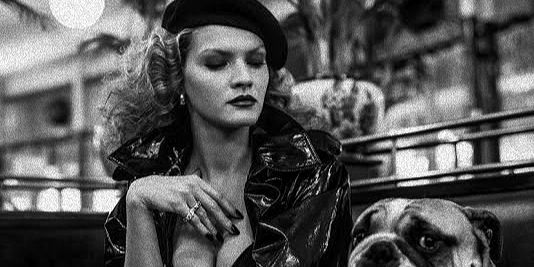
That same culturally charged atmosphere—multiple reflections of desire, self, and fantasy—still lives in certain spaces today. Beauty still radiates in music. Reflected in fashion and cinema.
Step into a room where every wall is solid glass and a large glass-plated door is encircled by tall, shimmering surfaces, and you feel it immediately: cascading images of yourself, each reflection sharing your face and feelings yet returning them in unexpected ways.
A house of mirrors can surprise and titillate.
The question that has followed us from Madison Avenue through the communes and the discotheques remains: has the fantasy of falling in love been completely commodified?

Or does it still hold genuine power?
Since we've been able to preserve the peaceful memory of counter-culture before cult of personalities led by violent white supremacists like Charles Manson corrupted the fantasy, there is a possibility that the fantasy of falling in love still has a hold on modern audiences.
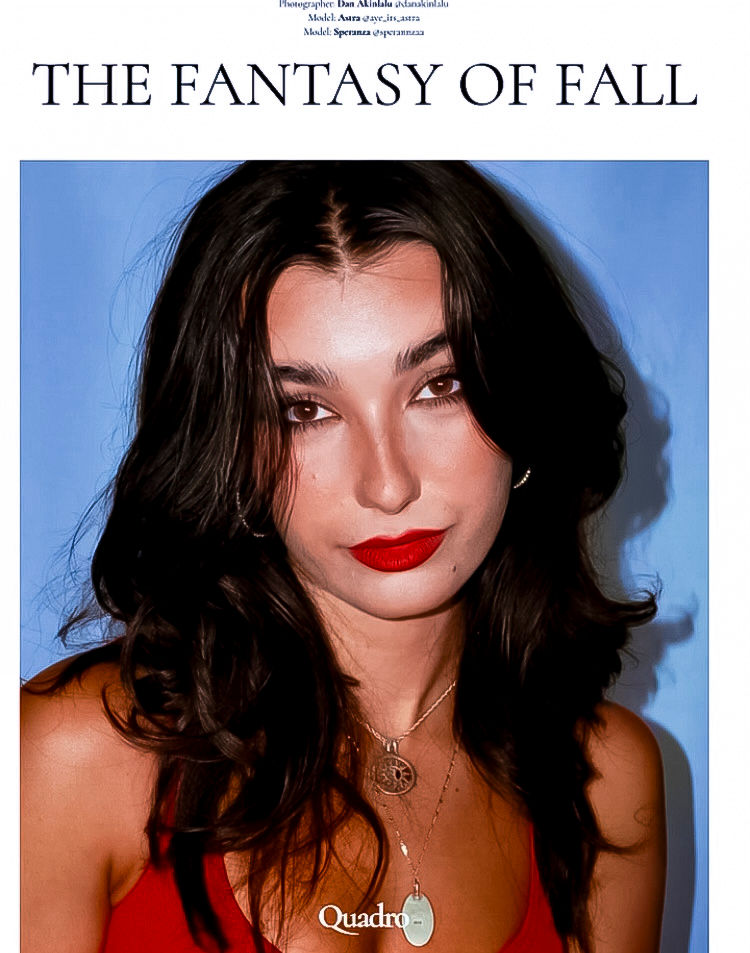
Performance artists who can resist the allure of simply making art for money, fame, and status-seeking know that the performance of psychological truth can deeply affect audiences when it's connected to a loving message that resonates. When audience come to House of Mirrors, they can read our artist statement and decide for themselves whether their values are in alignment with the erotic art they see in our gallery. The polaroid packs, magazine covers and editorial collections people purchase are natural expressions of this sense of alignment.
Soon, our Mirror Room subscribers will finally experience the deep-dive into the artistry of creative people who dominated in the 70s and 80s, iconic artists who shaped popular culture with bold explorations of the power of erotic art. We'll take a closer look at Michael Jackson and Prince's career, just as promised last month, when I started the power of erotic art series.

Brilliant writing, can't wait for the next one! Dancing Machine is a classic!!!